
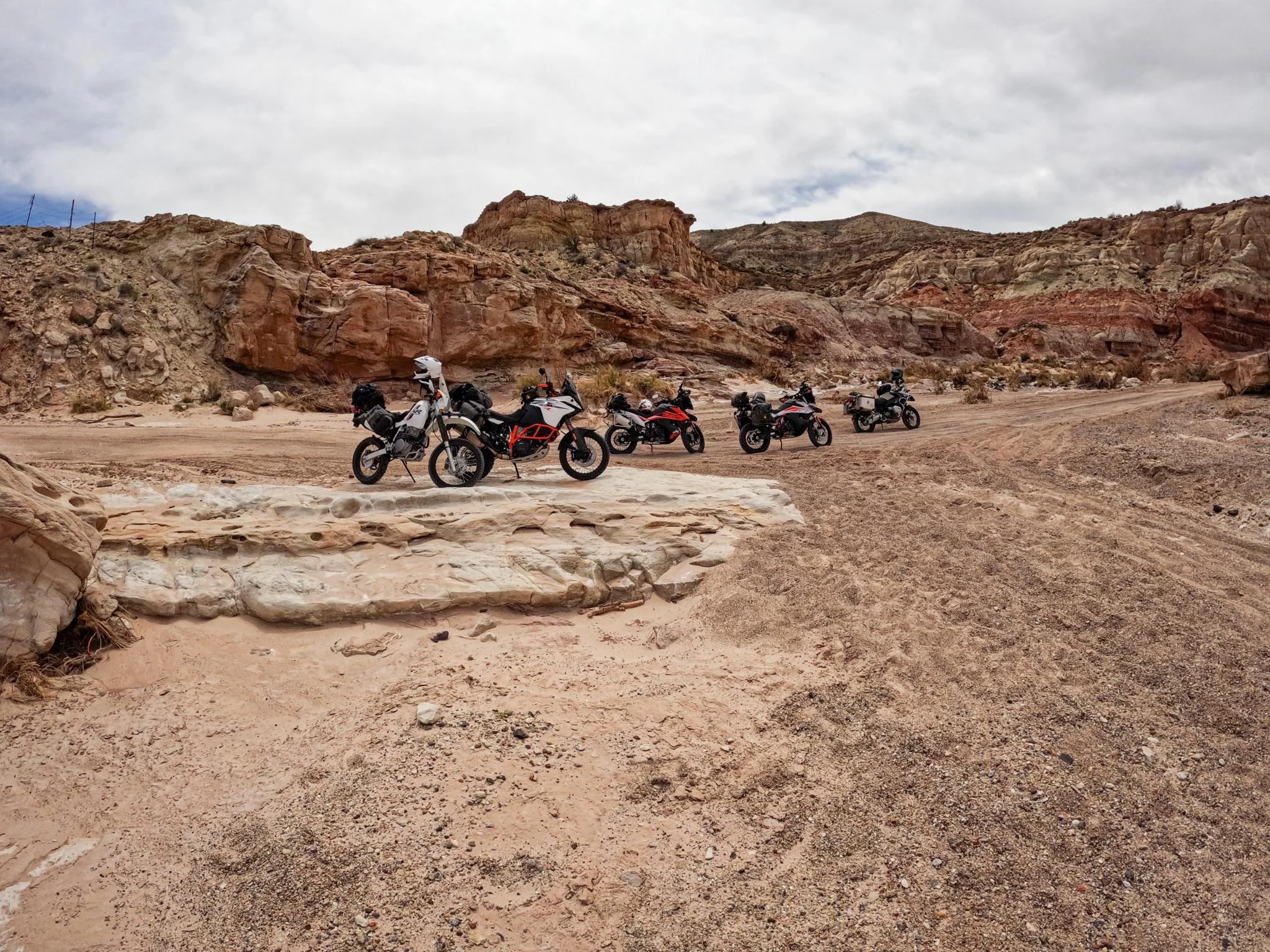
What to Expect on a Waypoints West Ride
A warm valley, a chilly mountain pass, and a whole lot of good dirt can all fit into one ride day. Knowing what the route asks of you, what gear to bring, and how your group will ride helps you spend more of that day enjoying it.
Start with your ride’s itinerary and terrain rating, then use this page to get yourself, your bike, and your navigation ready to roll.
What a Ride Day Looks Like
Many of our rides cover 125–200 miles in an 8–9 hour day, with about 5–6 hours in the saddle. The rest of the day includes fuel, food, breaks, and the occasional stop for a view that’s worth taking your gloves off for. Check your itinerary for the best picture of your route’s mileage and pace.
Pack for warm valleys and cold passes, sometimes on the same day. Many of our routes climb above 9,000 feet, and some passes approach 13,000 feet. Bring layers, waterproof gear, and enough water for long stretches between stops.
Find the Right Ride for Your Skill Level
A few miles of loose rock can take more out of you than a whole afternoon on smooth gravel. Look at both the terrain and the length of the days when you’re picking a ride. Think about what you can ride comfortably on a loaded bike, especially late in the day when you’re tired.
Check the terrain rating on your ride page and work through the rider self-assessment before you book. If you’re between levels, tell us what you’ve ridden and what you’d like to take on next. We’ll talk it through with you.
Guided & Self-Guided Rides
Guided rides. Your Waypoints West lead rider handles navigation, sets the group’s pace, and helps adjust the plan when weather, terrain, or rider comfort calls for it. When there’s a sweep rider, they stay at the back and help keep the group together.
Self-guided rides. We plan the route, book the hotels included in your package, and walk you through navigation and route options on your pre-ride call. Once you’re rolling, your crew handles navigation, pace, and decisions on the route.

Navigation
Load your route before you roll. If you’re navigating by phone, download the area maps for offline use and check that the route opens with your phone in airplane mode.
Be ready to navigate to the day’s destination on your own if the group needs to split or take an alternate. If you need a GPS, ask us about Garmin XT availability for your guided ride. For self-guided rides, a preloaded Garmin is available as a rental add-on.
Renting a bike? We recommend bringing your own device and mount. Most of our rental bikes have a 1-inch RAM mount ball. Ask us about your bike’s setup before you pack.

Riding Gear
Required Gear
DOT-approved motorcycle helmet
Eye protection, such as goggles or a helmet face shield
Full-finger riding gloves
Full-length motorcycle boots. Two-buckle ADV boots are the minimum. Three- or four-buckle enduro boots are preferred.
Recommended Gear
Armored riding gear
A 2–3 liter hydration pack
A personal satellite communicator for stretches outside cell coverage
Layers and waterproof gear for changing weather

Get Your Bike Ready
Give your bike a proper once-over while you’re still close to your garage. Have it serviced and inspected before departure, and check the brakes, chain, and sprockets. Replace anything that’s close to worn out and start the ride with at least 50% tire tread remaining.
Bring the tools and spares that fit your bike, including a spare lever and the right tire repair supplies for your setup. That could mean a spare tube and patches or a plug kit for tubeless tires.

Luggage & Packing
Bring motorcycle luggage for your personal gear and check how it fits with the bike fully loaded. Keep the things you’ll reach for during the day, like water, snacks, and rain gear, easy to grab.
Need bags? Ask us about renting a tank bag, saddlebags, or a tail duffel.

How We Ride as a Group
A good group ride leaves everyone room to ride their own ride. Here’s how we keep the group together on a guided ride. If you’re riding self-guided, talk through these basics with your crew before you leave.
Ride your pace. Leave enough room to stop and give yourself extra space in dust or loose terrain. Ride to the right and use a staggered formation on pavement and improved gravel when conditions allow.
Keep the ride order. The lead rider stays up front and the sweep, when assigned, stays at the back. If you’d like to move up or back, sort it out at a stop.
Watch your wingman. That’s the rider directly behind you. At each turn, pull over somewhere safe and wait until they see where you’re going. If they’re taking longer than expected, stop safely and let the group know.
Mind the gates. If the group needs to open a gate, the second rider opens it and the third rider closes it once everyone is through. Leave gates as you found them.
Pass with care. Pass other vehicles only when it’s safe and legal, and make your intentions clear. Give fellow riders room and keep the roost to yourself.
Help with downed bikes. If your bike goes down, wait for a hand before lifting it. If someone else drops theirs, stop somewhere safe before helping.

What Our Ride Leaders Carry
On guided rides, our ride leaders are trained in wilderness first aid and carry a first-aid kit, tire repair supplies, jumper cables, and common tools. Recovery gear and select spares for our rental bikes are also available.
Bring a personal first-aid kit and any tools or spare parts specific to your bike. Riding self-guided? Compare kits with your crew before departure so you know who’s carrying what.
Have a Ride in Mind for Your Crew?
Tell us where you want to ride, how much dirt you’re after, and what a good day in the saddle looks like for your group. We’ll help you put together a ride that fits.